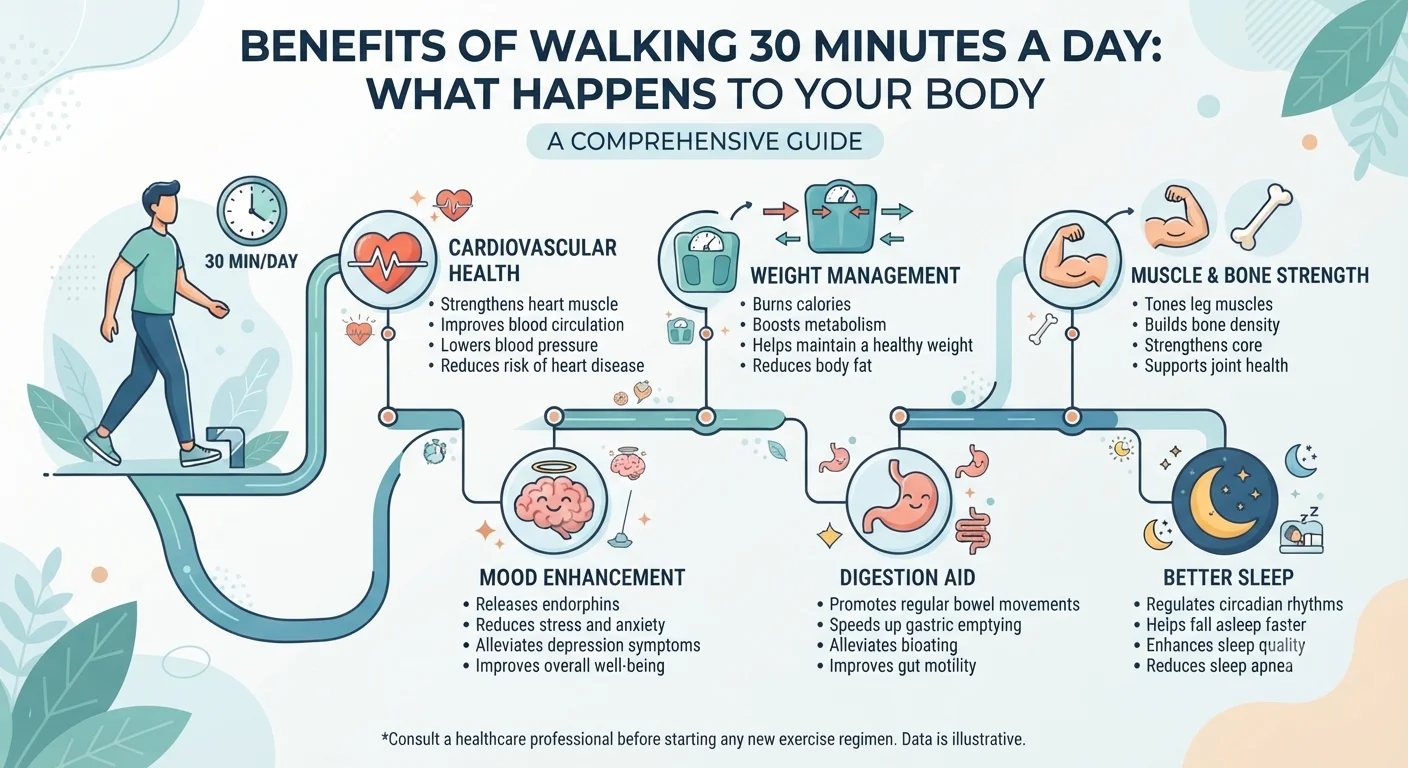
Walking 30 minutes a day at a moderate pace reduces cardiovascular disease risk by up to 35 percent, significantly improves blood sugar control, supports healthy weight management, strengthens bones, boosts immune function, reduces depression and anxiety symptoms, and enhances cognitive performance. These benefits are measurable within weeks and accumulate with consistent practice. Walking is the most universally accessible form of exercise with one of the strongest evidence bases in medicine.
Key Takeaways
- A landmark meta-analysis of 196 studies published in the British Journal of Sports Medicine in 2019 found that adults who walked at least 150 minutes per week (equivalent to 30 minutes five days a week) had a 35 percent lower risk of cardiovascular disease compared to sedentary adults.
- The World Health Organization's 2020 global guidelines on physical activity for health state that 150 to 300 minutes of moderate-intensity aerobic activity per week (including brisk walking) is sufficient for substantial health benefits in adults.
- A 2022 study published in JAMA Internal Medicine tracked 78,500 UK Biobank participants and found that just 8,000 to 10,000 steps per day (approximately 60 to 80 minutes of moderate walking) was associated with significantly lower risks of cancer, cardiovascular disease, and all-cause mortality.
- Research from Harvard Medical School found that walking at a brisk pace for 30 minutes per day is associated with a 41 percent lower risk of type 2 diabetes compared to sedentary behavior.
- A 2023 study published in "Nature Aging" found that adults who walked regularly had meaningfully younger brain age on MRI scans compared to sedentary adults of the same chronological age, with a difference averaging 1.5 years of brain age per decade of regular walking.
Is 30 Minutes of Walking Enough Exercise?
- Key Takeaways
- Is 30 Minutes of Walking Enough Exercise?
- Week-by-Week Changes When You Walk 30 Minutes Daily
- Physical Health Benefits of Daily Walking
- Cardiovascular Health: Reduced Heart Disease Risk
- Weight Management and Metabolism
- Blood Sugar Regulation
- Bone Density and Joint Health
- Immune System Support
- Mental Health Benefits of Walking
- Reduced Depression and Anxiety
- Improved Creativity and Problem-Solving
- Better Sleep Quality
- How to Make Walking More Effective
- Best Times of Day to Walk for Maximum Benefits
- Frequently Asked Questions About Walking 30 Minutes a Day
The question of whether walking constitutes "real" exercise is one frequently asked by people beginning fitness journeys. The scientific literature answers it definitively: yes, for the majority of health outcomes, 30 minutes of brisk daily walking meets or exceeds the threshold of physical activity required to produce substantial health benefits.
The U.S. Department of Health and Human Services Physical Activity Guidelines for Americans (second edition, 2018) state that any moderate-intensity aerobic activity counts toward weekly physical activity targets, and brisk walking (3 to 4 miles per hour, or approximately 5 to 6.5 kilometers per hour) meets the definition of moderate intensity for most adults.
The distinction between moderate-intensity and vigorous-intensity exercise matters for understanding what walking achieves and what it does not. Running, high-intensity interval training, and vigorous cycling produce somewhat larger cardiovascular and metabolic benefits per minute than brisk walking. However, walking's accessibility means that people are far more likely to perform it consistently, and consistency compounds benefits far more powerfully than intensity.
Research by exercise scientist Dr. Paul Williams at Lawrence Berkeley National Laboratory, published in Arteriosclerosis, Thrombosis, and Vascular Biology in 2013, found that equivalent energy expenditure from walking produced almost identical reductions in cardiovascular disease risk factors (blood pressure, cholesterol, diabetes risk) as running. Walking more slowly simply requires more time to achieve the same energy expenditure.
Week-by-Week Changes When You Walk 30 Minutes Daily
The timeline of changes that occur in your body when you begin walking 30 minutes every day follows a predictable pattern from immediate acute effects to long-term structural adaptations.
During the first week, immediate effects after each walking session include elevated heart rate that returns to resting level within 10 to 20 minutes, improved blood flow and oxygen delivery throughout the body, modest release of endorphins and serotonin producing mild mood elevation, and activation of muscles in the legs, glutes, core, and upper body. Blood glucose levels decrease meaningfully in the 30 to 60 minutes following a brisk walk, which is particularly beneficial for people with prediabetes or type 2 diabetes.
During weeks two and four, early adaptations begin. Resting heart rate begins to decline as the cardiovascular system becomes more efficient. Blood pressure shows the first measurable reductions, typically 2 to 5 mmHg systolic. Sleep quality improves for many people, as documented in a 2019 meta-analysis in "Mental Health and Physical Activity." Energy levels throughout the day increase as cardiovascular efficiency improves.
Between months two and three, structural cardiovascular adaptations become established. Stroke volume (the volume of blood pumped per heartbeat) increases, meaning each heartbeat delivers more oxygen to tissues. Capillary density in working muscles increases, improving oxygen and nutrient delivery. HDL cholesterol (the protective form) increases meaningfully, and triglycerides begin to decline. Body weight may begin to decline modestly if walking creates a caloric deficit.
Beyond three months of consistent practice, research documents increasingly substantial benefits: meaningful reduction in visceral abdominal fat (associated with metabolic disease risk), improved insulin sensitivity, measurable cognitive performance improvements, and the bone density and joint health adaptations that have long-term musculoskeletal implications for aging.
Physical Health Benefits of Daily Walking
Cardiovascular Health: Reduced Heart Disease Risk
Heart disease remains the leading cause of death globally, responsible for 17.9 million deaths per year according to the World Health Organization's 2023 report. Walking is one of the most evidence-supported non-pharmacological interventions for reducing cardiovascular disease risk.
The mechanisms through which walking improves cardiovascular health are multiple and interacting. Walking strengthens the heart muscle, improving its pumping efficiency. It reduces arterial stiffness, a key risk factor for hypertension and stroke. It improves the function of the endothelium, the inner lining of blood vessels that regulates blood pressure and prevents clot formation. It reduces chronic low-grade inflammation, measured by biomarkers including C-reactive protein (CRP), which is increasingly recognized as a central driver of atherosclerosis (the plaque buildup in arteries that causes heart attacks and strokes).
A 2021 systematic review and meta-analysis published in the "European Journal of Preventive Cardiology" analyzed 30 prospective cohort studies involving over 700,000 participants and found that the highest levels of walking were associated with a 35 percent reduced risk of cardiovascular disease compared to the lowest levels. The dose-response relationship was clear: each additional 500 steps per day was associated with a 7 percent reduction in cardiovascular disease risk up to approximately 10,000 steps, beyond which additional benefits were modest.
Walking has also been shown to reduce blood pressure by an average of 3 to 4 mmHg systolic and 2 to 3 mmHg diastolic in hypertensive individuals according to a 2016 meta-analysis in the "Journal of the American Heart Association." This magnitude of blood pressure reduction corresponds to approximately a 15 to 20 percent reduction in stroke risk, according to established dose-response relationships between blood pressure and stroke incidence.
Weight Management and Metabolism
Walking burns approximately 250 to 400 calories per 30-minute session depending on body weight (heavier individuals burn more) and pace. This direct calorie expenditure contributes to the caloric deficit required for weight loss or maintenance.
Beyond direct calorie burn during walking itself, regular walking increases resting metabolic rate over time through its effects on muscle mass, mitochondrial density, and hormonal regulation. A 2012 study published in "Obesity" found that formerly sedentary adults who walked briskly for 45 minutes per day four days per week for 12 weeks showed significant increases in resting metabolic rate independent of changes in body weight.
Walking also affects appetite hormones in ways that support weight management. A 2008 study in the "American Journal of Physiology" found that a brisk 30-minute walk significantly reduced ghrelin (the hunger hormone) for 60 to 90 minutes after exercise, while not suppressing appetite hormones enough to cause compensatory overeating at subsequent meals, a balance that supports gradual weight reduction.
Blood Sugar Regulation
The blood glucose lowering effect of walking after meals is one of its most clinically significant benefits, particularly given that type 2 diabetes and prediabetes affect an estimated 422 million and 374 million people globally respectively, according to the International Diabetes Federation Atlas 2025.
Skeletal muscle is the primary site of glucose uptake from the bloodstream. During walking, muscle contractions activate GLUT4 transporter proteins in muscle cell membranes that allow glucose to enter cells without requiring insulin. This insulin-independent glucose uptake mechanism is why exercise is particularly beneficial for people with insulin resistance.
A rigorous 2022 systematic review and meta-analysis published in "Sports Medicine" analyzed 58 randomized controlled trials of walking interventions and found that regular walking reduced fasting blood glucose by an average of 0.47 mmol/L and glycated hemoglobin (HbA1c) by 0.39 percentage points, both clinically meaningful reductions in people with or at risk for type 2 diabetes.
A 2022 study published in "Sports Medicine" and a related 2023 study in "Current Biology" specifically examined postprandial (after-meal) walking and found that even a short 2 to 5 minute walk taken immediately after meals significantly blunted blood glucose spikes compared to sitting after the same meal. Standing after meals showed an intermediate effect. These findings have practical significance: postprandial walks are specifically beneficial for people with elevated blood sugar and require only brief interruptions to sedentary postmeal behavior.
Bone Density and Joint Health
Osteoporosis affects an estimated 200 million people globally and is responsible for 8.9 million fractures annually worldwide, according to the International Osteoporosis Foundation. Bone density decreases with age, particularly after menopause in women, and inadequate physical activity is a major modifiable risk factor.
Walking is a weight-bearing exercise, meaning it loads the skeleton with the body's weight and the ground reaction forces generated with each step. This mechanical loading stimulates osteoblasts, the cells responsible for bone formation, to produce new bone tissue. Research consistently shows that regular weight-bearing activity including walking is associated with higher bone mineral density at the hip and spine, the sites most affected by osteoporotic fracture.
A 2019 meta-analysis in the journal "Osteoporosis International" analyzing 20 randomized controlled trials found that walking interventions significantly improved lumbar spine bone mineral density compared to control conditions, with effects most pronounced in postmenopausal women.
Regarding joint health, walking provides a beneficial "pump" effect on cartilage tissue. Cartilage lacks blood vessels and receives nutrients through a process of compression and decompression during movement. Regular walking maintains this nutrient exchange, supporting cartilage health. The concern that walking "wears out" joints is not supported by the evidence: research consistently shows that recreational walking at moderate intensity is not associated with increased osteoarthritis incidence and may actually be protective.
Recommended Articles
 HEALTH WELLNESS
 HEALTH WELLNESS
 HEALTH WELLNESS
 HEALTH WELLNESS
Immune System Support
The relationship between moderate exercise and immune function is one of the most consistent findings in exercise immunology. Regular moderate-intensity exercise, including brisk walking, enhances multiple components of innate immunity: increasing the circulation of natural killer cells and neutrophils that identify and eliminate pathogens, reducing chronic low-grade inflammation that impairs immune surveillance, and potentially improving vaccine effectiveness through enhanced immune cell mobilization.
- How Much Water Should You Drink Per Day? The Science-Based Answer
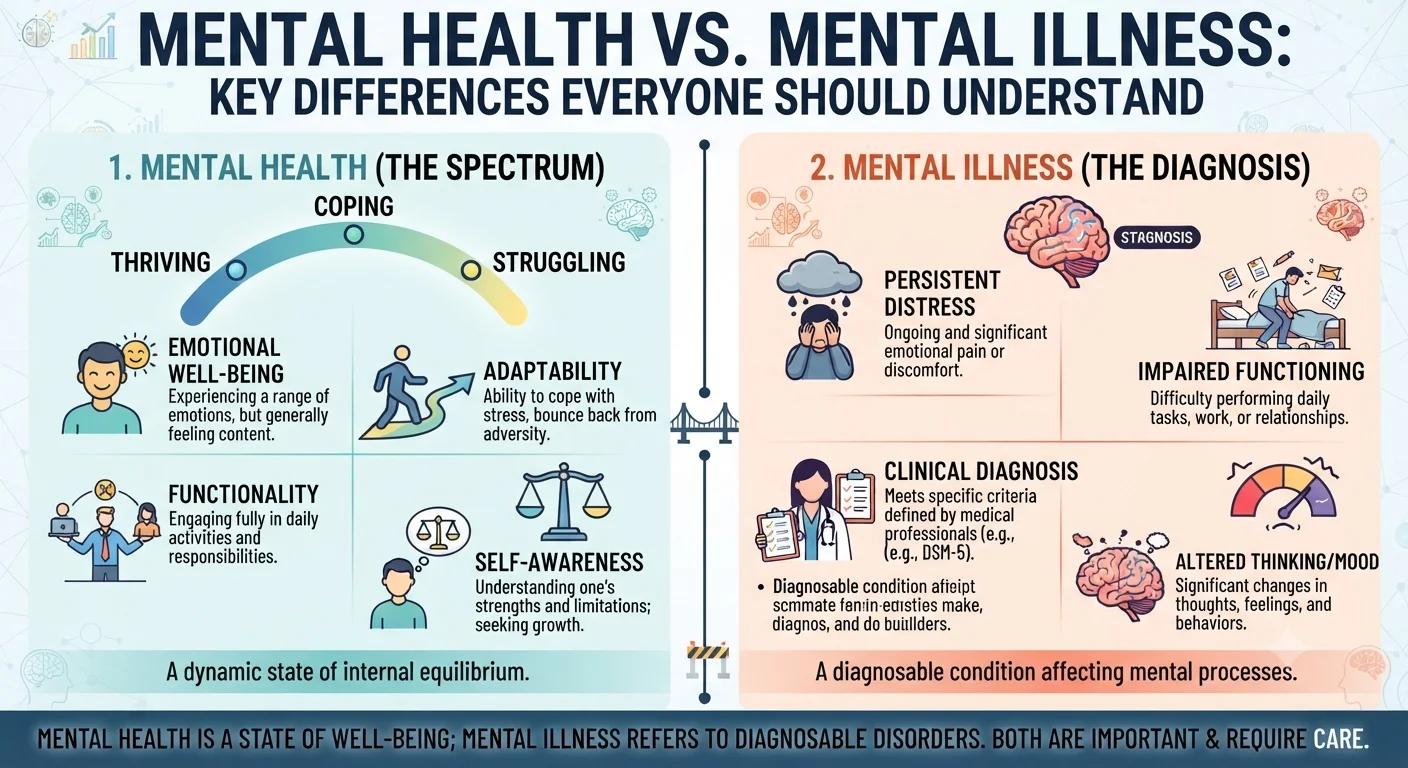
- Mental Health vs Mental Illness: Key Differences Everyone Should Understand
- How to Lose Weight Without Dieting: 12 Sustainable Science-Based Strategies
A 2019 systematic review published in the "Journal of Sport and Health Science" synthesized evidence from 32 studies and found that regular moderate-intensity exercise was associated with significantly reduced incidence of upper respiratory tract infections (the common cold, influenza) compared to sedentary behavior, with a dose-response relationship suggesting that 150 to 300 minutes per week of moderate activity produced optimal immune benefits.
The J-shaped relationship between exercise and infection risk is well established: moderate regular exercise reduces illness risk, while intense unrecovered exercise temporarily suppresses immune function. Brisk daily walking falls squarely in the moderate zone that supports rather than suppresses immune response.
Mental Health Benefits of Walking
Reduced Depression and Anxiety
Walking's mental health benefits have one of the strongest evidence bases of any behavioral intervention for depression and anxiety. The 2023 British Journal of Sports Medicine meta-analysis of 97 systematic reviews on exercise and mental health found that walking was among the most accessible and consistently effective exercise modalities for reducing depression symptoms, with effect sizes comparable to antidepressant medication for mild to moderate depression.
Mechanistically, walking increases circulating levels of serotonin, dopamine, and norepinephrine, neurotransmitters whose deficits are implicated in depression. It also stimulates the release of BDNF (brain-derived neurotrophic factor), which promotes neurogenesis (the formation of new neurons) in the hippocampus, a brain region that shows structural volume reduction in people with major depression and that is specifically targeted by effective antidepressant treatments.
A landmark 1999 randomized trial published in the "Archives of Internal Medicine" by Dr. James Blumenthal at Duke University compared walking exercise to antidepressant medication (sertraline) and a combination of both for the treatment of major depression. At 16 weeks, all three conditions produced equivalent reductions in depression symptoms. At a 10-month follow-up, participants who continued exercising had lower relapse rates than those who had taken medication alone.
For anxiety specifically, walking produces acute reductions in anxiety symptoms through multiple pathways: distraction from anxious rumination, activation of the sympathetic nervous system followed by parasympathetic rebound (producing physical relaxation), and the outdoor environment of many walks exposing people to natural light and natural settings that independently reduce cortisol.
Improved Creativity and Problem-Solving
One of the most practically useful and less widely appreciated cognitive benefits of walking is its effect on creative thinking. A landmark 2014 study by Dr. Marily Oppezzo and Dr. Daniel Schwartz at Stanford University published in the "Journal of Experimental Psychology: Learning, Memory, and Cognition" found that walking increased creative output (as measured by divergent thinking tasks) by an average of 81 percent compared to sitting.
The effect was observed not only during the walk but continued for several minutes after participants sat back down, suggesting that walking induces a brain state favorable to creative and associative thinking that persists beyond the walk itself.
The mechanism likely involves walking's activation of the default mode network, a collection of brain regions associated with mind-wandering, daydreaming, and associative thinking that generates creative connections between disparate concepts. Walking activates just enough of this network to produce generative thinking while maintaining enough focused arousal to keep thought productive.
Steve Jobs was famously known for conducting walking meetings and credited walking as central to his creative process. Friedrich Nietzsche, Charles Darwin, and Ludwig van Beethoven all maintained rigorous daily walking habits that they described as essential to their most productive creative work.
Better Sleep Quality
The relationship between regular walking and sleep quality is supported by consistent evidence across multiple study designs. A 2019 meta-analysis in "Mental Health and Physical Activity" analyzed 29 randomized controlled trials of exercise and sleep in adults without diagnosed sleep disorders and found that moderate-intensity exercise including walking significantly improved overall sleep quality, sleep onset latency (time to fall asleep), sleep duration, and sleep efficiency.
The mechanisms connecting walking to better sleep include body temperature effects (walking increases core body temperature, which drops during the recovery period after exercise, and falling body temperature is a physiological cue for sleep onset), adenosine accumulation (physical activity accelerates adenosine buildup, which increases sleep pressure), and anxiety reduction (as described above, walking reduces the anxious arousal that prevents sleep onset in many people).
The timing of walking affects sleep differently. Morning and afternoon walks have the most consistent positive effects on sleep. Evening walks, particularly at high intensity, may delay sleep onset in some individuals due to elevated sympathetic nervous system activity, though brisk walking at low to moderate intensity in the two to three hours before bed does not impair sleep for most people and may benefit it.
How to Make Walking More Effective
Increasing walking pace from leisurely strolling to brisk walking significantly increases calorie expenditure and cardiovascular stimulus. A brisk walking pace produces visible breathing effort and makes conversation somewhat effortful without making it impossible, which corresponds to the moderate-intensity exercise zone. On a 1 to 10 perceived exertion scale, brisk walking should feel like a 4 to 6.
Adding incline through hilly terrain or treadmill incline substantially increases energy expenditure and cardiovascular load without changing walking speed. A 5 percent incline increases calorie burn by approximately 30 percent compared to flat walking at the same speed. A 10 percent incline approximately doubles the calorie expenditure of flat walking.
Walking with Nordic poles engages the upper body and core muscles, increasing total muscle involvement and calorie expenditure by 20 to 46 percent compared to regular walking at the same speed, according to research published in the "Journal of Sports Sciences."
Breaking 30 minutes of walking into three 10-minute sessions produces equivalent cardiovascular benefits to a single continuous 30-minute session, according to a 2014 meta-analysis in the "Journal of the American Heart Association." This finding has important practical implications: even people with fragmented schedules can accumulate the daily walking benefit across multiple short sessions.
Best Times of Day to Walk for Maximum Benefits
The optimal time to walk depends on which specific benefit you are prioritizing, as different walking times produce different physiological effects.
Morning walks, taken within 30 to 60 minutes of waking, provide circadian rhythm benefits through sunlight exposure (natural light in the morning anchors the circadian clock and improves nighttime sleep quality), cortisol modulation (morning exercise uses the natural morning cortisol peak constructively), and the mood and energy benefits that persist throughout the day.
Post-meal walks, particularly the 10 to 20 minutes following lunch or dinner, are specifically valuable for blood glucose management. As described in the blood sugar section above, the postprandial glucose spike is significantly blunted by even brief walking immediately after eating.
Afternoon walks in the mid-afternoon (2 to 4 PM for most chronotypes) align with a natural circadian dip in alertness and core body temperature. A brisk walk during this period counteracts the afternoon slump more effectively than caffeine for many people and provides an energy and focus boost for the remaining work hours.
Evening walks support digestion and the gradual physiological wind-down toward sleep, provided they are completed at least two hours before bed and at moderate rather than high intensity.
Frequently Asked Questions About Walking 30 Minutes a Day
Does walking 30 minutes a day really make a difference?
Yes, decisively. The epidemiological and clinical evidence is among the most consistent in exercise medicine. A sedentary person who begins walking 30 minutes per day at moderate pace achieves meaningful reductions in cardiovascular disease risk, improved metabolic health markers, reduced depression and anxiety, better sleep, and modest weight management benefits, all documented in controlled studies within weeks to months of beginning the practice.
How many calories does a 30-minute walk burn?
Calorie expenditure during walking depends primarily on body weight and pace. A person weighing 70 kilograms (154 pounds) walking briskly at 5.5 kilometers per hour (3.5 miles per hour) burns approximately 150 to 180 calories in 30 minutes. A person weighing 90 kilograms (198 pounds) at the same pace burns approximately 200 to 240 calories. Adding incline substantially increases these values.
What should I wear and bring for daily walks?
Supportive walking shoes appropriate for your foot type are the most important equipment consideration. Research from the American Podiatric Medical Association shows that inadequate footwear is the primary cause of foot, ankle, and knee pain from walking. For hot weather, sun protection (hat, sunscreen) and adequate hydration are important. A smartphone with a fitness tracking app or a dedicated fitness tracker enables step counting and distance tracking without requiring dedicated equipment purchases.
Can elderly people benefit from walking 30 minutes a day?
Walking is specifically recommended by geriatric medicine specialists as the exercise most consistently associated with improved outcomes in older adults. A 2022 meta-analysis in "The Journals of Gerontology" found that walking interventions in adults aged 65 and older produced significant improvements in physical function, reduced fall risk, improved cognitive performance, and reduced all-cause mortality. The intensity should be appropriate to individual capacity, and those with medical conditions should consult their healthcare provider before significantly increasing activity levels.
Is walking better than running for health?
Walking and running produce comparable health benefits per unit of energy expenditure, according to research by Dr. Paul Williams at Lawrence Berkeley National Laboratory. Running achieves the same health benefits in less time (shorter duration for equivalent energy expenditure), while walking achieves them with lower injury risk and greater accessibility. For adults who cannot run due to joint conditions, weight, or cardiovascular limitations, walking delivers the health benefits of aerobic exercise without the impact forces and injury risks of running.