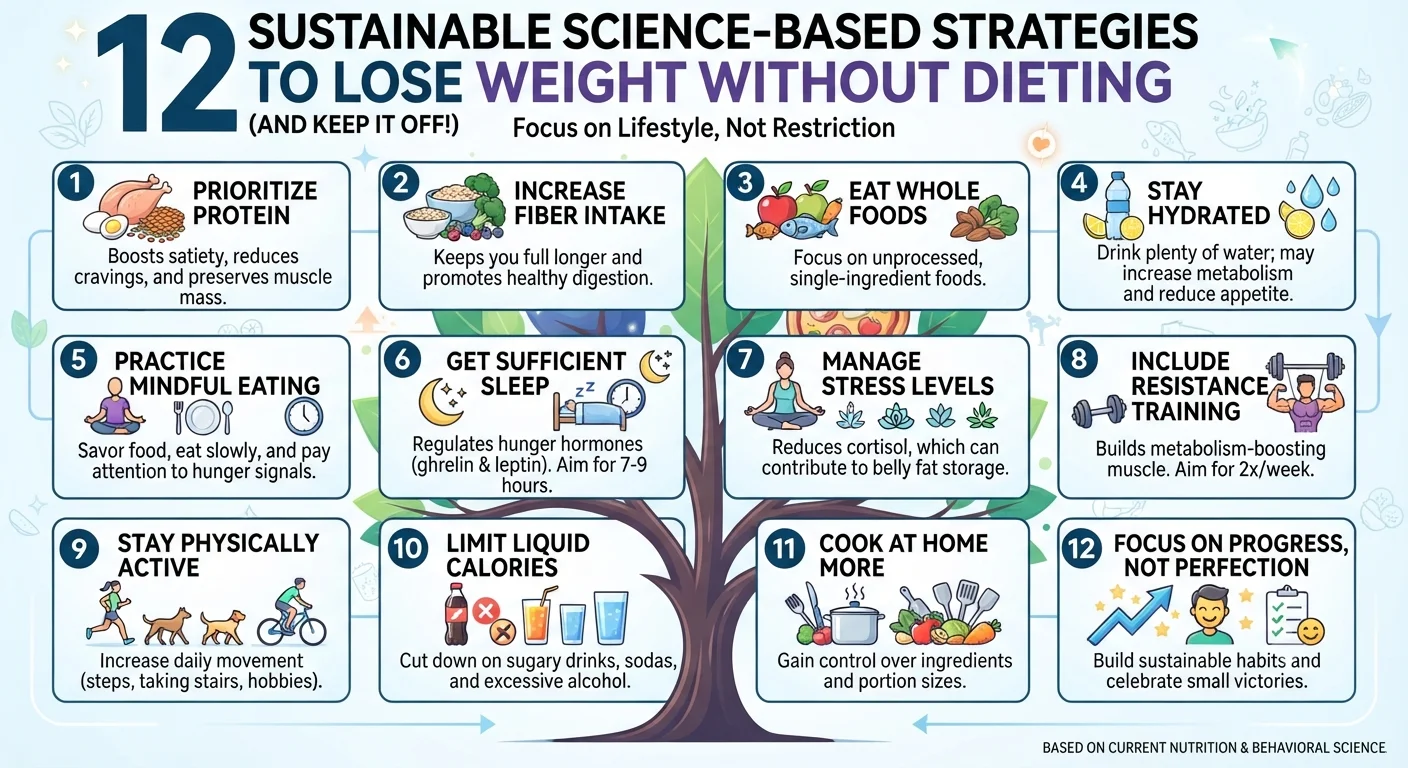
Losing weight without dieting is achievable through sustainable behavioral changes that address eating speed, food quality, physical activity, sleep, and stress management. Research consistently shows that these strategies produce more durable weight loss than calorie-restricted diets, because they modify the behaviors and biological signals that regulate body weight long-term, rather than simply reducing intake temporarily until willpower fails.
Key Takeaways
- Research published in the New England Journal of Medicine found that 95 percent of people who lose weight through traditional calorie-restricted dieting regain most or all of it within five years.
- Non-Exercise Activity Thermogenesis (NEAT), which includes all physical movement outside formal exercise (walking, standing, fidgeting), accounts for 15 to 50 percent of total daily calorie burn and is one of the most modifiable variables for weight management.
- Sleep deprivation of even two to three nights significantly elevates ghrelin (the hunger hormone) and suppresses leptin (the satiety hormone), increasing daily calorie intake by an average of 300 to 400 calories, according to University of Chicago research.
- Eating speed directly affects calorie intake. A 2011 study in the American Journal of Clinical Nutrition found that slower eaters consumed 10 percent fewer calories per meal while reporting equal or greater satiety than faster eaters.
- Ultra-processed foods, defined by the NOVA classification system as industrial formulations with five or more ingredients including additives, account for 57 percent of the average American diet and are strongly associated with excess calorie intake, obesity, and metabolic dysfunction.
Why Crash Diets Fail 95 Percent of the Time
- Key Takeaways
- Why Crash Diets Fail 95 Percent of the Time
- 12 Proven Ways to Lose Weight Without Strict Dieting
- 1. Eat Slowly and Mindfully: The 20-Minute Rule
- 2. Drink Water Before Every Meal
- 3. Prioritize Protein at Every Meal
- 4. Increase NEAT: Non-Exercise Activity Thermogenesis
- 5. Sleep 7 to 9 Hours: The Hunger Hormone Connection
- 6. Reduce Ultra-Processed Food Intake Gradually
- 7. Use Smaller Plates: The Delboeuf Illusion
- 8. Manage Stress to Lower Cortisol
- 9. Build Lean Muscle to Boost Metabolism
- 10. Intermittent Eating Windows: Not Strict IF
- 11. Track Without Obsessing: Smart Food Journaling
- 12. Address Emotional Eating Triggers
- What the Research Says: Weight Loss Without Dieting Studies
- Realistic Timeline: How Fast Can You Lose Weight Sustainably?
- Frequently Asked Questions About Losing Weight Without Dieting
The failure rate of conventional dieting is not a matter of willpower or motivation. It is the predictable result of the body's homeostatic regulatory systems working exactly as designed.
When calorie intake drops significantly below maintenance level, the body interprets this as a survival threat. It responds through multiple compensatory mechanisms designed to restore energy balance. Metabolic rate decreases as the body becomes more efficient with available energy. Levels of leptin, the satiety hormone produced by fat tissue, drop, reducing feelings of fullness. Levels of ghrelin, the hunger hormone, increase, amplifying the drive to eat. Muscle mass is sacrificed for energy alongside fat, further reducing resting metabolic rate. These adaptations persist long after the diet ends, creating a metabolic state that strongly favors fat regain.
A landmark 2011 study following contestants from the American television program "The Biggest Loser" documented these mechanisms in striking detail. Researchers led by Dr. Kevin Hall at the National Institute of Diabetes and Digestive and Kidney Diseases found that six years after the competition, most contestants had regained substantial weight. More critically, their resting metabolic rates remained dramatically suppressed compared to what would be predicted for their body size, meaning they burned approximately 500 fewer calories per day than people of equivalent size who had never lost significant weight. The diet had permanently altered their metabolism against them.
The twelve strategies below work differently. Rather than imposing a calorie restriction the body fights to reverse, they address the behavioral patterns, hormonal signals, food environment, and lifestyle factors that allow excess weight to accumulate gradually. Their effect is slower in the short term but dramatically more durable.
12 Proven Ways to Lose Weight Without Strict Dieting
1. Eat Slowly and Mindfully: The 20-Minute Rule
The satiety signal that tells your brain you have eaten enough takes approximately 15 to 20 minutes to travel from your gut to your brain. A fast eater who finishes a meal in ten minutes consumes the entire plate before the fullness signal arrives, routinely overeating by 20 to 30 percent beyond their actual energy needs.
Research published in the British Medical Journal in 2018 analyzed dietary data from 59,717 participants and found that eating slowly was significantly associated with lower BMI, smaller waist circumference, and reduced prevalence of obesity compared to eating at a normal or fast pace.
Practical slow eating strategies include setting down your utensils between each bite, chewing each mouthful 15 to 20 times before swallowing, taking a sip of water between bites, and engaging in genuine conversation during meals (which naturally interrupts eating pace). Avoiding screens during meals removes the distraction that allows mindless fast eating and enables proper attention to hunger and satiety cues.
Mindful eating, the broader practice of paying full attention to the sensory experience of eating without distraction, has a substantial evidence base for reducing calorie intake and improving eating satisfaction simultaneously. A 2014 review in the American Journal of Clinical Nutrition found that mindful eating interventions produced significant reductions in binge eating frequency, emotional eating, and total calorie intake.
2. Drink Water Before Every Meal
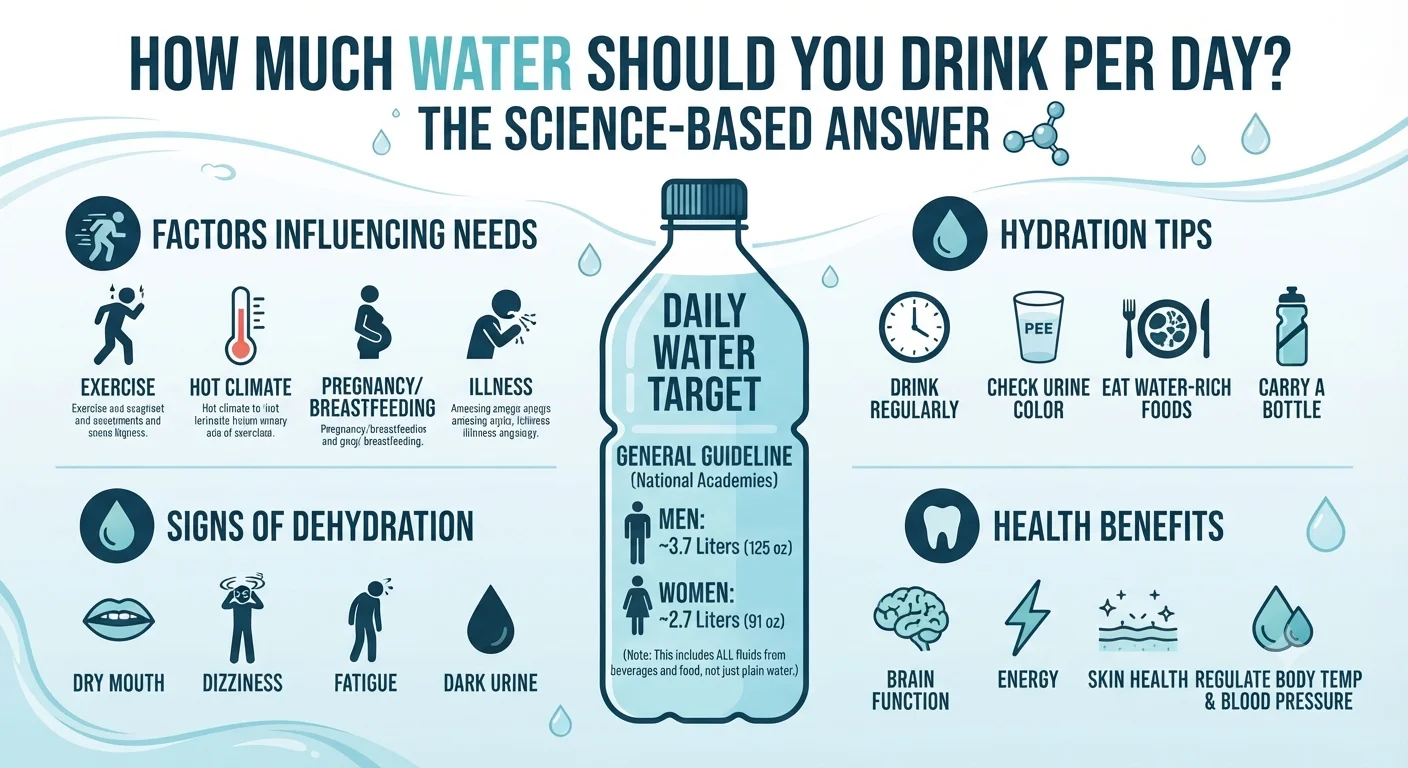
Drinking water before meals reduces calorie intake at the subsequent meal through two mechanisms. First, water occupies stomach volume, increasing the stretch signals that contribute to satiety. Second, people frequently misinterpret thirst signals as hunger, eating when what their body actually needs is hydration.
A 2015 randomized controlled trial published in the journal "Obesity" assigned 84 overweight adults to drink 500ml of water thirty minutes before each main meal or to consume no pre-meal water. After twelve weeks, the water group lost an average of 1.3kg more than the control group, with no other dietary changes.
An older but widely cited Virginia Tech study found that adults who drank two cups of water before each meal consumed 75 to 90 fewer calories per meal, translating to approximately 225 to 270 fewer calories per day without any conscious dietary restriction. Over one year, this deficit would theoretically produce a weight loss of 10 to 13 kilograms, assuming other variables remain constant.
The optimal timing is 15 to 30 minutes before eating, allowing the stomach to register the volume signal before the meal begins.
3. Prioritize Protein at Every Meal
Protein is the most satiating macronutrient per calorie. It produces stronger and more sustained suppression of ghrelin (hunger hormone) than equivalent calories from carbohydrates or fats, and it has a significantly higher thermic effect of food, meaning the body burns approximately 20 to 35 percent of protein calories in the process of digesting and metabolizing it, compared to just 5 to 15 percent for carbohydrates and 0 to 3 percent for fats.
A 2005 study published in the American Journal of Clinical Nutrition found that increasing protein from 15 percent to 30 percent of total calories, without any other dietary restriction, caused participants to spontaneously consume 441 fewer calories per day, leading to significant weight loss over twelve weeks. The reduction was entirely driven by reduced hunger rather than dietary willpower.
Practically, prioritizing protein means including a protein source at every meal and snack: eggs, Greek yogurt, cottage cheese, legumes, lean meat, fish, tofu, or protein powder. Aiming for 25 to 35 grams of protein per meal is a practical target that aligns with the research on satiety and muscle preservation during weight loss.
Higher protein intake also preserves lean muscle mass during a calorie deficit, which maintains metabolic rate and produces a better body composition outcome (more fat loss relative to muscle loss) than equivalent weight loss through carbohydrate restriction.
4. Increase NEAT: Non-Exercise Activity Thermogenesis
NEAT represents all physical activity that is not formal exercise, not sleeping, and not eating. It includes walking to the mailbox, fidgeting at your desk, taking the stairs, doing household chores, and standing rather than sitting. Research by Dr. James Levine at the Mayo Clinic has established NEAT as one of the most important and most variable contributors to total daily energy expenditure.
Dr. Levine's research found that NEAT differences between individuals can account for up to 2,000 calories per day in energy expenditure. A naturally active person who walks throughout the day, takes stairs consistently, and moves frequently at their desk can burn the same calories through NEAT that a sedentary person would need to run fifteen to twenty miles to equal.
In practical terms, increasing NEAT does not require a gym membership or formal exercise commitment. Strategies include taking a ten-minute walk after each meal (research shows post-meal walking significantly reduces blood glucose spikes), standing at a desk for two to three hours of the workday using a standing desk converter, parking farther from destinations, taking stairs consistently instead of elevators, doing household chores with more physical vigor, and pacing while taking phone calls.
A fitness tracker or smartphone step count function provides useful feedback. Research suggests that 7,000 to 10,000 steps per day represents a meaningful NEAT level associated with significantly better metabolic health and weight management compared to the average American's approximately 3,000 to 4,000 daily steps.
5. Sleep 7 to 9 Hours: The Hunger Hormone Connection
The relationship between sleep and body weight is one of the most robustly established findings in metabolic research. Chronic sleep restriction elevates ghrelin, suppresses leptin, increases the reward value of high-calorie foods in brain imaging studies, and impairs the prefrontal cortex's ability to resist food cravings, creating a four-way biological pressure toward overconsumption.
A University of Chicago study by Dr. Eve Van Cauter and colleagues found that adults sleeping 5.5 hours per night versus 8.5 hours per night consumed an average of 385 additional calories per day under controlled conditions where food was freely available. An annual surplus of this magnitude would theoretically produce approximately eighteen kilograms of additional weight gain per year.
A 2022 randomized controlled trial published in the journal "JAMA Internal Medicine" directly tested whether increasing sleep duration in habitually short sleepers (those averaging 6.5 hours or less per night) would reduce calorie intake. After two weeks, the sleep extension group reduced their ad libitum calorie intake by 270 calories per day compared to controls, and also lost a small but significant amount of body weight compared to the control group. This study is notable as one of the first to use a randomized design to demonstrate that improving sleep alone causes meaningful reductions in calorie intake.
Practical sleep optimization for weight management: maintain a consistent sleep schedule, keep the bedroom at 18 to 19 degrees Celsius, eliminate light and noise from the sleep environment, avoid caffeine after noon, and reduce screen exposure in the 60 minutes before bed.
6. Reduce Ultra-Processed Food Intake Gradually
Ultra-processed foods (UPFs) are industrial formulations classified by the NOVA food classification system as products with five or more ingredients, including additives such as emulsifiers, flavor enhancers, artificial colors, and preservatives that would not be used in home cooking. Examples include packaged snacks, soft drinks, instant noodles, mass-produced bread, breakfast cereals with added sugar, processed meats, and frozen ready meals.
A pivotal 2019 randomized controlled trial by Dr. Kevin Hall and colleagues at the National Institutes of Health directly compared ad libitum consumption of ultra-processed versus unprocessed diets for two weeks each. Participants consumed approximately 500 more calories per day on the ultra-processed diet compared to the unprocessed diet, despite the diets being matched for total macronutrients, sugar, fat, fiber, and total offered calories. The caloric excess from UPFs was entirely spontaneous, driven by the foods' properties (faster eating rate, higher caloric density, weaker satiety signaling) rather than conscious overeating.
The practical implication is not that all ultra-processed foods must be immediately eliminated. A gradual substitution approach, replacing the most frequently consumed UPFs with less processed alternatives one category at a time, produces sustainable behavior change without the deprivation effect that characterizes strict dietary rules. Replacing packaged snacks with whole fruit and nuts, replacing sugary breakfast cereals with oat-based options, and replacing processed meat with whole protein sources are high-impact starting points.
Recommended Articles
 HEALTH WELLNESS
 HEALTH WELLNESS
 HEALTH WELLNESS
 HEALTH WELLNESS
7. Use Smaller Plates: The Delboeuf Illusion
The Delboeuf Illusion is an optical phenomenon in which a circle of fixed size appears larger when surrounded by a small circle and smaller when surrounded by a large circle. Applied to food psychology, food portions served on large plates appear smaller than identical portions served on smaller plates, influencing how much people feel they have eaten and how satisfied they feel.
Cornell University food and brand lab researcher Dr. Brian Wansink (whose work on food psychology, though some studies have faced scrutiny, has been replicated in multiple independent laboratories) demonstrated in multiple studies that people consistently serve themselves 30 to 45 percent more food on larger plates and report equivalent satisfaction despite consuming more. Reducing plate diameter from 30cm to 24cm has been associated with a reduction of approximately 30 percent in self-served portion sizes in cafeteria studies.
Practical application is straightforward: use side plates (typically 18 to 24cm diameter) as dinner plates for main meals, use smaller bowls for cereal and snacks, and use tall, narrow glasses for caloric beverages rather than wide, short glasses (a separate visual illusion related to volume perception causes people to pour and consume more from wide glasses).
8. Manage Stress to Lower Cortisol
Chronic psychological stress elevates cortisol, the body's primary stress hormone, in ways that directly affect body composition. Elevated cortisol increases appetite specifically for high-fat, high-sugar foods (sometimes called "comfort foods") through its action on reward circuits in the brain. It also promotes fat storage preferentially in the abdominal region, the visceral fat that is most strongly associated with cardiovascular and metabolic disease risk.
A 2001 study by Dr. Elissa Epel at the University of California, San Francisco found that women who reacted to stress tasks with larger cortisol responses ate significantly more high-sugar food in a subsequent taste test compared to low-cortisol responders, even after controlling for dietary restraint and emotional eating tendencies.
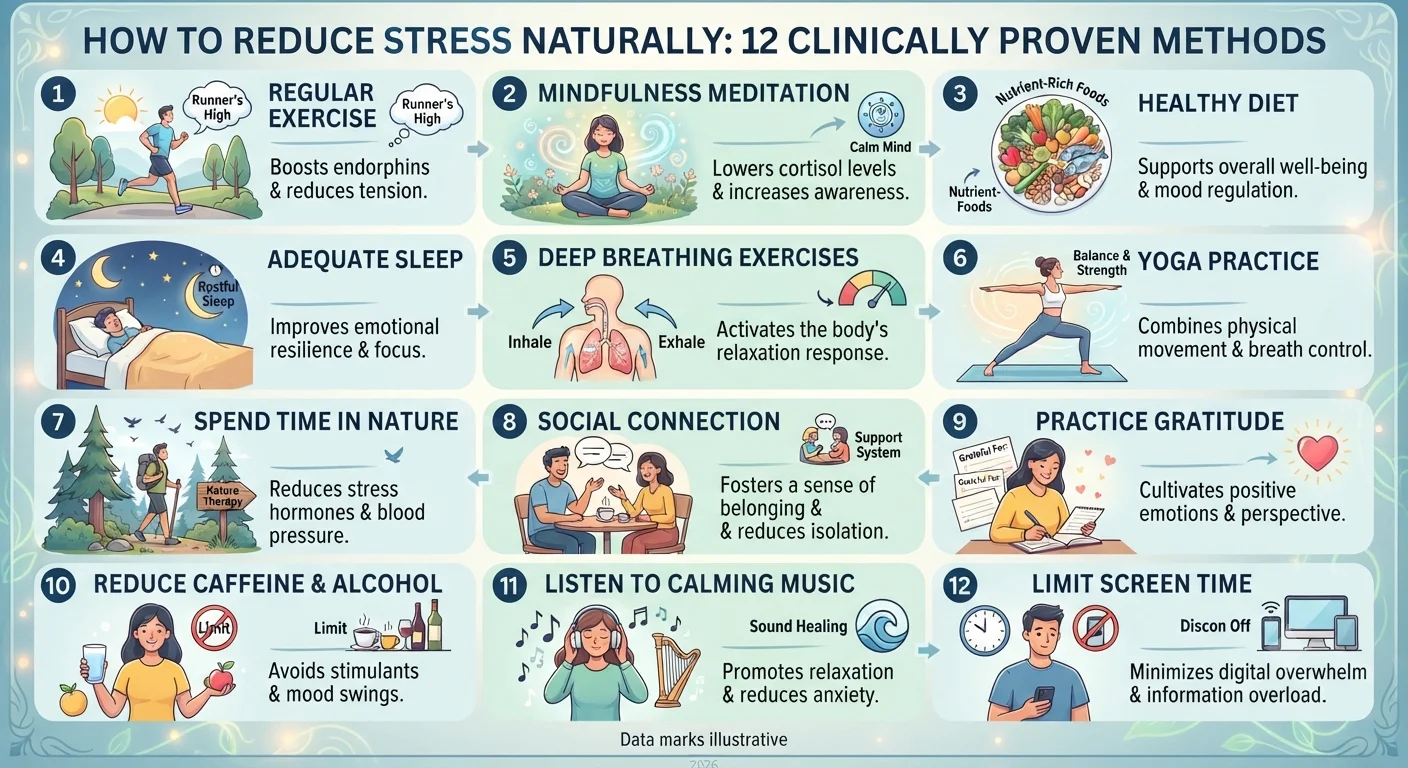
Effective stress management strategies with evidence for reducing cortisol and supporting weight management include aerobic exercise (which acutely elevates cortisol but normalizes it with regular practice), mindfulness meditation (a 2014 meta-analysis found MBSR programs reduced cortisol levels significantly), adequate sleep (cortisol is highly sleep-sensitive), social connection (interactions with supportive relationships buffer physiological stress responses), and time in natural environments (research from Japan on "forest bathing" consistently shows cortisol reductions after thirty minutes in natural settings).
9. Build Lean Muscle to Boost Metabolism
Skeletal muscle tissue is metabolically active, meaning it burns calories even at rest. Resting metabolic rate (RMR), the calories your body burns at complete rest, is closely correlated with lean muscle mass. Each kilogram of muscle burns approximately 13 calories per day at rest, compared to approximately 4.5 calories per kilogram of fat tissue.
This distinction matters significantly for weight management. Two people of identical body weight, one with 45 percent lean mass and one with 30 percent lean mass, will have markedly different resting metabolic rates. The leaner individual burns meaningfully more calories at rest, making weight maintenance substantially easier.
Resistance training, whether through free weights, machine weights, resistance bands, or bodyweight exercises, stimulates muscle protein synthesis and builds lean mass when combined with adequate protein intake. A 2021 meta-analysis published in "Obesity Reviews" found that resistance training produced significant reductions in body fat percentage even without dietary restriction, primarily through its effect on increasing resting energy expenditure.
For individuals new to resistance training, three sessions per week of 30 to 45 minutes targeting all major muscle groups (legs, back, chest, shoulders, arms) is sufficient to produce meaningful improvements in lean mass and resting metabolic rate within eight to twelve weeks.
10. Intermittent Eating Windows: Not Strict IF
Rather than prescribing intermittent fasting with its rigid eating windows and social inflexibility, a more practical approach is simply establishing consistent eating windows that prevent the pattern of late-night snacking that contributes significantly to calorie excess in many individuals.
Research consistently shows that a significant proportion of total daily calorie intake occurs after 8 PM for many adults. A 2020 study in the journal "Cell Metabolism" found that restricting calorie intake to a ten-hour window (not necessarily reducing total calories) produced modest weight loss and metabolic improvements over twelve weeks compared to unrestricted eating patterns.
A practical, non-restrictive eating window approach is straightforward: establish a consistent first meal time and a consistent last meal time, aim for a gap of twelve to fourteen hours between the last meal of one day and the first meal of the next (which includes sleep, making the overnight fast effortless), and avoid caloric beverages after a set evening time. This approach does not require tracking macros, counting calories, or enduring significant hunger.
11. Track Without Obsessing: Smart Food Journaling
Food journaling has a strong evidence base for supporting weight loss and weight maintenance. A Kaiser Permanente study of 1,685 adults found that those who kept food diaries six or seven days per week lost twice as much weight as those who kept no records, even without specific dietary instructions.
The mechanism is awareness. Most people dramatically underestimate their calorie intake (by 20 to 50 percent according to multiple studies) and overestimate their physical activity. Brief, non-obsessive food tracking closes this awareness gap and enables more informed decision-making without requiring precise calorie counting.
Apps including MyFitnessPal, Cronometer, and Lose It provide food databases that make logging fast and accessible. An approach that minimizes obsessive tendencies is to log meals without strict calorie targets, focusing instead on protein adequacy, vegetable intake, and identifying patterns of excess.
Logging consistently for two to four weeks as a learning exercise, then using periodic spot-checking rather than continuous logging, tends to produce the benefit of awareness without the psychological burden of permanent tracking.
12. Address Emotional Eating Triggers
Emotional eating, eating in response to emotional states (stress, boredom, loneliness, anxiety, celebration) rather than genuine physiological hunger, contributes meaningfully to calorie excess for a large proportion of the population. A 2013 survey by the American Psychological Association found that 38 percent of American adults report having overeaten or eaten unhealthy foods in the past month specifically because of stress.
Identifying and addressing emotional eating triggers does not require extensive therapy in most cases, though cognitive behavioral therapy (CBT) has the strongest evidence base for persistent emotional eating patterns. Practical first steps include distinguishing physical hunger from emotional hunger (physical hunger builds gradually, responds to many foods, and resolves when eating stops; emotional hunger arrives suddenly, craves specific comfort foods, and continues even after fullness), identifying the specific emotions that precede eating episodes, and developing alternative responses to those emotional states (going for a walk, calling a friend, journaling, engaging in a hobby).
The HALT acronym, popularized in behavioral health contexts, is a useful prompt: before eating, ask whether you are Hungry, Angry, Lonely, or Tired. If the answer is any of the latter three rather than genuinely hungry, the actual need is something other than food.
What the Research Says: Weight Loss Without Dieting Studies
Beyond the individual study citations above, several comprehensive reviews have evaluated the broader evidence for non-dietary weight management approaches.
A 2019 systematic review published in "BMJ Open" analyzed fourteen randomized controlled trials of mindful eating interventions and found significant reductions in binge eating, emotional eating, and body weight across studies, with no dietary restriction prescribed in most trials.
A 2020 Cochrane Review of behavioral weight management programs (which emphasize habit change over dietary restriction) found that these programs produced clinically meaningful weight loss of three to five percent of body weight sustained at twelve-month follow-up, with substantially better maintenance rates than equivalent weight loss achieved through caloric restriction programs.
A 2023 meta-analysis in "Obesity Reviews" covering sleep extension interventions found that improving sleep duration in habitual short sleepers produced significant reductions in calorie intake and modest but significant weight loss without any dietary guidance.
The convergence of evidence across these domains supports the central thesis: sustainable body weight management emerges from sustainable behavior change across multiple domains simultaneously, not from short-term dietary willpower.
Realistic Timeline: How Fast Can You Lose Weight Sustainably?
Evidence-based weight loss medicine defines sustainable weight loss as 0.5 to 1.0 kilogram per week, equivalent to approximately 500 to 1,000 calories of daily energy deficit. This rate preserves more lean muscle mass than faster loss, is associated with better long-term maintenance, and avoids the metabolic suppression triggered by very rapid weight loss.
At this rate, realistic expectations are:
One month: 2 to 4 kilograms, with most initial loss including some water weight from reduced sodium and glycogen stores.
Three months: 6 to 12 kilograms of genuine fat loss, with visible body composition changes in most people.
Six months: 12 to 25 kilograms for those with significant excess weight, representing clinically meaningful improvements in metabolic health markers including blood pressure, fasting blood glucose, and triglycerides.
The strategies in this article produce a combined daily energy deficit through reduced intake, increased expenditure, and improved metabolic efficiency that is consistent with this sustainable rate. They will not produce dramatic short-term results, but they will produce durable long-term change that a 95 percent-failure-rate crash diet will not.
Frequently Asked Questions About Losing Weight Without Dieting
Is it really possible to lose weight without counting calories?
Yes. Calorie counting is one tool for managing energy balance, not the only tool. The strategies in this article address calorie balance through behavioral and environmental mechanisms rather than conscious numerical tracking. Research consistently shows that reducing UPFs, increasing protein and fiber, improving sleep, and increasing NEAT produce meaningful calorie deficits without requiring calorie counting.
How much weight can I lose by just drinking more water?
Drinking water before meals has been shown in clinical trials to produce approximately 1 to 2 kilograms of additional weight loss over twelve weeks compared to equivalent conditions without pre-meal water. This effect, while real, is modest and works best as one component of a broader approach.
Will I lose muscle as well as fat if I am not dieting?
The strategies in this article, particularly prioritizing protein intake and incorporating resistance training, are specifically designed to minimize muscle loss during the weight reduction process. Research shows that adequate protein intake (1.6 to 2.2 grams per kilogram of body weight per day) combined with resistance training preserves lean mass effectively even in a caloric deficit.
What is the single most effective strategy in this list?
Research on the hierarchy of weight management interventions consistently places sleep as having the largest effect on subsequent calorie intake due to its direct hormonal mechanisms, followed by protein prioritization for its effects on spontaneous calorie reduction through satiety. However, combining multiple strategies produces synergistic effects that exceed any individual intervention.
Can these strategies work for people with obesity or metabolic conditions?
The strategies described are appropriate for most adults. However, individuals with obesity, type 2 diabetes, thyroid disorders, polycystic ovary syndrome (PCOS), or other metabolic conditions should consult a healthcare provider or registered dietitian before making significant behavioral changes. These conditions involve hormonal and metabolic factors that may modify the expected response to these interventions.
How long do I need to maintain these habits to keep weight off?
These habits are designed to become permanent behavioral patterns rather than temporary interventions. The research on weight maintenance is clear: people who successfully maintain weight loss long-term are those who permanently adopt behavioral changes in eating patterns, activity level, and sleep quality. The advantage of the approaches in this article is that they are sustainable without requiring ongoing willpower or sacrifice.