Quick Answer
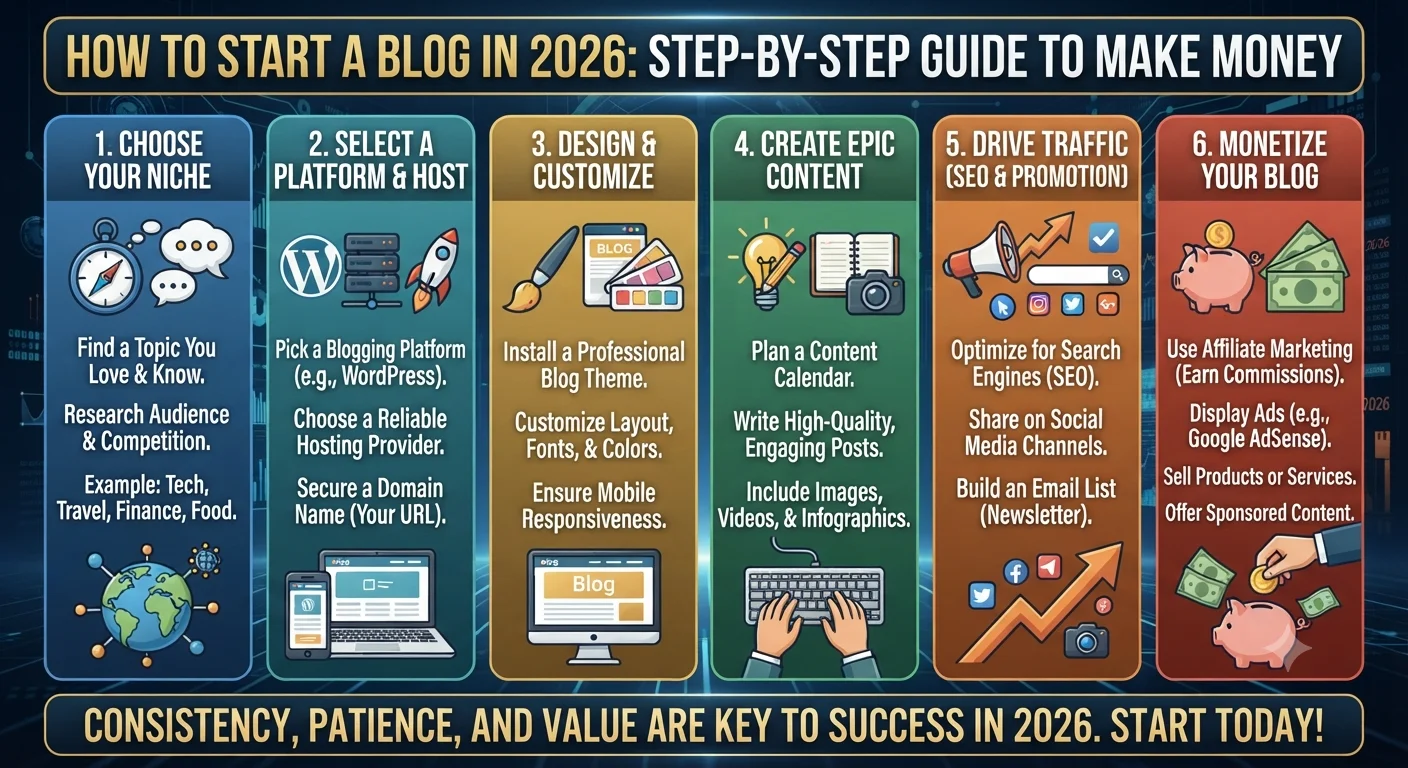
Starting a profitable blog in 2026 requires six steps: choosing a specific niche with search demand and monetization potential, buying a domain and hosting, installing WordPress, publishing high-quality SEO-optimized content consistently, building topical authority over six to twelve months, and monetizing through display advertising, affiliate marketing, and digital products. Income is not immediate, but blogs built on genuine expertise and consistent publishing earn $1,000 to $10,000 per month or more within two to three years.
Key Takeaways
- Quick Answer
- Key Takeaways
- Why Blogging Still Works in 2026
- Step 1: Choose a Profitable Niche
- Step 2: Choose a Domain Name and Hosting
- Step 3: Install and Configure WordPress
- Step 4: Create Essential Pages Before Publishing
- Step 5: Publish High-Quality Content Consistently
- Step 6: Monetize Your Blog
- Display Advertising
- Affiliate Marketing
- Digital Products
- Frequently Asked Questions About Starting a Blog in 2026
- There are over 600 million blogs on the internet as of 2026, according to GrowthBadger research, but fewer than 20 percent publish content consistently enough to build meaningful traffic.
- The average successful blogger who earns more than $50,000 per year reports that it took 18 to 36 months of consistent work before income reached that level, according to the 2025 ProBlogger Income Report.
- WordPress powers approximately 43 percent of all websites on the internet as of 2026, making it the most widely used content management system and the standard choice for new bloggers.
- Display advertising revenue on a blog with 100,000 monthly pageviews in a premium niche (personal finance, health, technology) generates approximately $3,000 to $8,000 per month through Mediavine or Raptive ad networks.
- Google's Helpful Content system, which became a core algorithm signal in 2024, now penalizes content created primarily to rank for keywords rather than to genuinely serve readers, making authentic expertise the most important differentiator for new blogs.
Why Blogging Still Works in 2026
The obvious question about starting a blog in 2026 is whether blogging is still viable given the rise of video content, AI-generated articles, and increasing Google algorithm complexity. The data suggests it absolutely is, with important qualifications.
Blogging as a business model works in 2026 for the same reason it always worked: there are billions of people searching for answers, information, and guidance every day, and the websites that provide the best answers earn traffic, trust, and income. What has changed is the quality bar.
Google's 2024 core algorithm updates and Helpful Content system have systematically reduced the visibility of generic, thin, and AI-generated content that was flooding search results. This has simultaneously made it harder for low-effort blogs to succeed and created more opportunity for blogs built on genuine expertise and comprehensive, original content.
The AI Overview and GEO (Generative Engine Optimization) layer adds a new dimension: content that is well-structured, factually dense, and clearly authoritative is now cited not only in traditional search results but also in Google's AI Overviews, ChatGPT Search, Perplexity, and other AI search tools. A single well-researched article can now earn traffic from five or six different search surfaces.
Blogs built on documented personal experience, original research, professional expertise, and consistent quality publishing continue to grow. Generic blogs covering broad topics without differentiation struggle more than they did five years ago.
Step 1: Choose a Profitable Niche
Niche selection is the most consequential decision in blogging and the stage where most beginners go wrong in one of two directions: too broad (a blog about "health and wellness" with no specific differentiation) or too narrow (a blog about a topic so specific it has insufficient search volume to build meaningful traffic).
The ideal niche has four characteristics. It has genuine search demand, meaning people actively search for information on this topic using terms you can verify in keyword research tools. It has monetization potential, meaning advertisers spend money reaching this audience (finance, health, technology, and education all have high advertiser demand and therefore high display ad CPM rates and strong affiliate program availability). You have genuine knowledge, experience, or strong interest in the topic that enables producing better content than competitors. There is room for differentiation, meaning existing content in this space has gaps or weaknesses you can address better.
High-performing niche categories in 2026 include personal finance subcategories (budgeting for specific demographics, investing for beginners, side hustles for specific professions), health subcategories (specific dietary approaches backed by evidence, specific health conditions, fitness for specific age groups or goals), technology subcategories (AI tools for specific professions, specific software tutorials, cybersecurity for non-technical audiences), education (specific exam preparation, specific skill development, homeschooling resources), and career development (specific industry career guidance, remote work strategies, freelancing in specific fields).
The process of niche selection should take at least one to two weeks of research. Use Ahrefs, Semrush, or the free Ubersuggest tool to examine search volumes and keyword difficulty for topics you are considering. Look at what the top-ranking blogs in your prospective niche are doing well and where their content is thin or outdated. Identify whether you can produce content that is measurably better than what currently exists.
Step 2: Choose a Domain Name and Hosting
Your domain name is your blog's address on the internet. A good domain name for a blog is short (ideally under fifteen characters), memorable, easy to spell when heard aloud, and not identical or confusingly similar to an existing brand. Using your own name as the domain works well for personal brand or expertise-based blogs. A descriptive or brandable name works for topic-focused blogs.
Domain registration costs approximately $12 to $15 per year for standard .com domains through registrars including Namecheap, Google Domains, or GoDaddy. The .com extension remains the most trusted and most recognized globally and should be your first choice unless genuinely unavailable.
Web hosting is the service that stores your website's files and makes them accessible on the internet. For new bloggers in 2026, three hosting options cover most needs.
Managed WordPress hosting on Kinsta or WP Engine provides the fastest performance and most reliable service, with expert WordPress support included. Monthly costs start at $35 to $70. Recommended for bloggers who can invest in quality infrastructure from the start.
Standard shared hosting on SiteGround, Bluehost, or Hostinger provides adequate performance for new blogs at lower cost, typically $3 to $15 per month with promotional pricing for new customers. Performance may need upgrading as traffic grows.
Cloudflare Pages or Netlify for static site generators (Hugo, Gatsby) provides excellent performance at very low cost for technically sophisticated users, but requires more technical setup than WordPress.
For most new bloggers, SiteGround's managed WordPress hosting at approximately $6 to $15 per month represents the best balance of performance, support quality, and cost at the beginning stage.
Step 3: Install and Configure WordPress
WordPress.org (self-hosted WordPress, distinct from WordPress.com's hosted service) is the standard platform for serious blogging. It is free, open-source software with thousands of themes and plugins that extend its functionality.
Most hosting providers offer one-click WordPress installation through their control panel (cPanel or a proprietary dashboard), making installation a matter of minutes. After installation, the essential configuration steps are:
Install a lightweight, fast theme. In 2026, the Kadence theme (free version available), Astra, and GeneratePress are the most popular choices for performance-focused blogs. Avoid themes with excessive animations and design elements that slow page loading.
Install essential plugins. Rank Math or Yoast SEO for on-page SEO management, including meta title and description editing, XML sitemap generation, and schema markup. WP Rocket or LiteSpeed Cache for page caching and performance optimization. UpdraftPlus for automated daily backups. Wordfence for security scanning and firewall protection. WP Smush or Imagify for automatic image compression.
Configure your permalink structure. Go to Settings, then Permalinks, and select the "Post name" option so URLs display as yourdomain.com/post-title rather than yourdomain.com/?p=123.
Recommended Articles
 DIGITAL MARKETING BUSINESS
 DIGITAL MARKETING BUSINESS
Set up Google Search Console and submit your sitemap. This is the single most important SEO action for a new blog, as it alerts Google to your site's existence and allows monitoring of indexing status, search performance, and technical errors.
Set up Google Analytics 4 (GA4) for visitor tracking. The free Analytify or MonsterInsights plugins simplify GA4 integration with WordPress.
Step 4: Create Essential Pages Before Publishing
Before publishing your first article, create the pages that Google, AdSense, and readers expect to find on a legitimate website. These pages also satisfy AdSense's content policy requirements and build E-E-A-T trust signals.
The About page should tell your readers who you are, what qualifications or experience you bring to the blog's topic, why you created the blog, and what value it provides to them. This page is one of the most visited pages on most blogs and is specifically evaluated by Google's human quality raters when assessing site credibility.
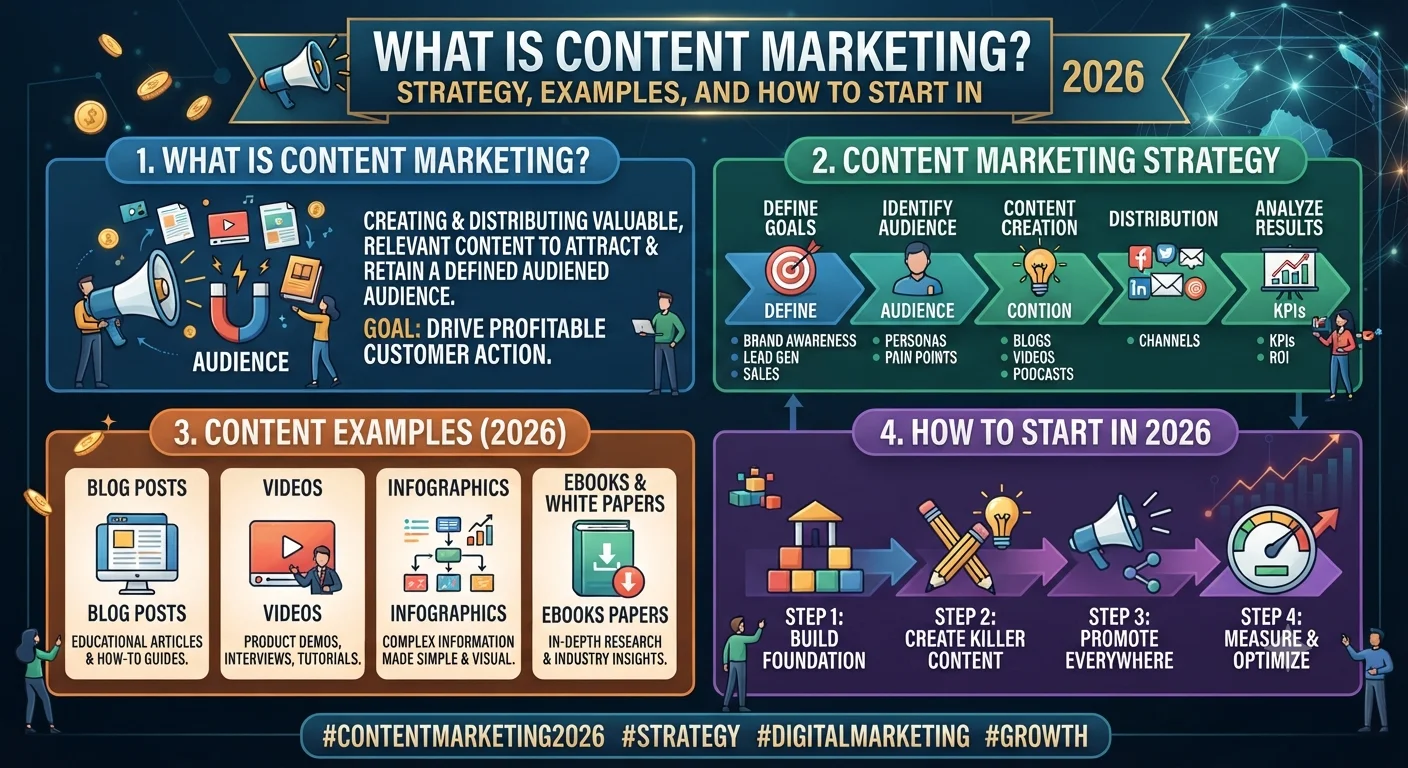
- What Is Content Marketing? Strategy, Examples, and How to Start in 2026
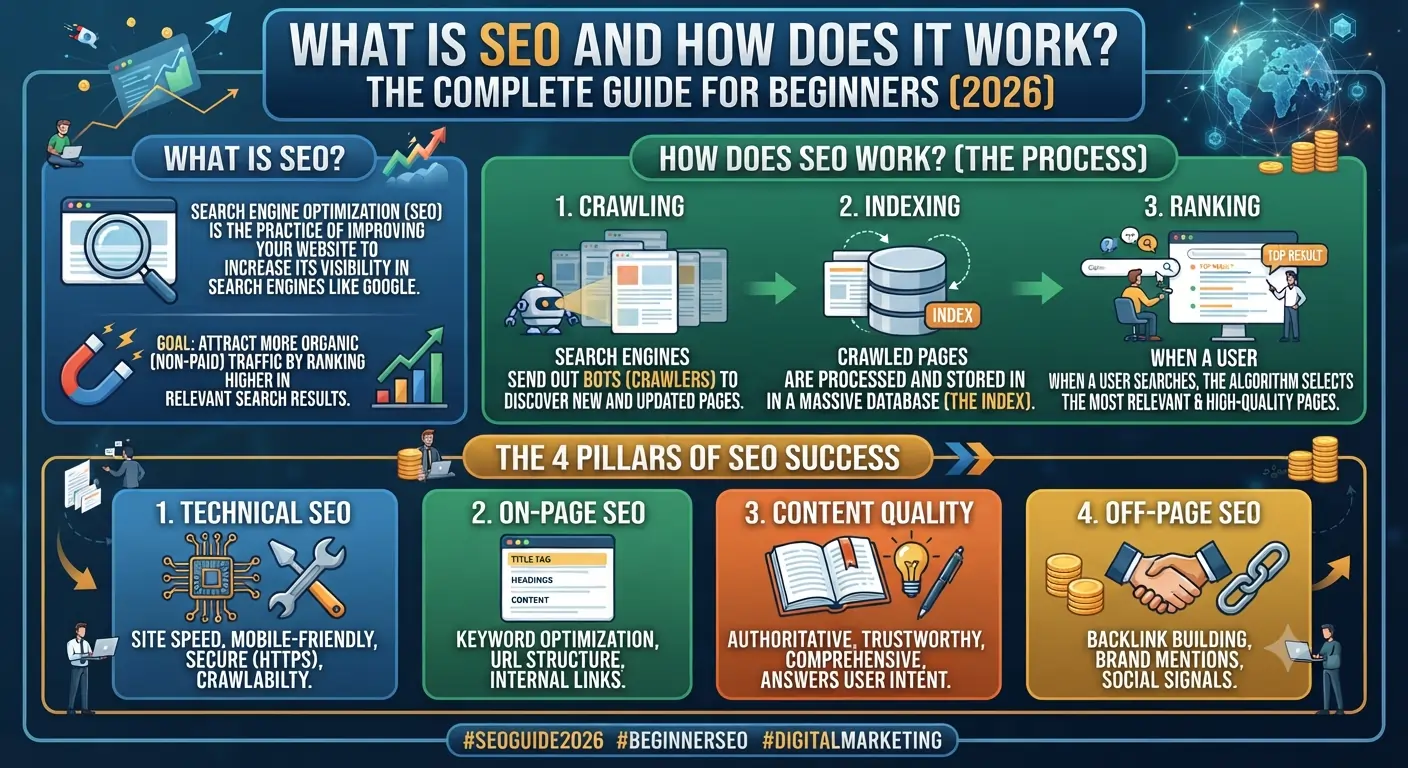
- What Is SEO and How Does It Work? The Complete Guide for Beginners (2026)
The Contact page should provide at minimum a contact form that routes messages to your email address. A physical address is not required for online-only businesses, but a working contact method is required by AdSense's policies.
The Privacy Policy must explain what data your website collects from visitors, how it is used, and their rights regarding that data. This is legally required by GDPR (for European visitors), CCPA (for California residents), and numerous other privacy laws. Free privacy policy generators including Termly and iubenda create compliant policies for small websites.
The Terms and Conditions and Disclaimer pages protect you legally and satisfy AdSense's requirements, particularly for blogs covering health, finance, or legal topics. A disclaimer clarifying that your content is for informational purposes only and does not constitute professional advice is essential for these categories.
Step 5: Publish High-Quality Content Consistently
Content is the product of a blog, and content quality is the primary determinant of long-term success. The bar for content quality in 2026 is higher than at any previous point, driven by Google's Helpful Content algorithm, the abundance of AI-generated generic content competing for the same keywords, and the increasing sophistication of readers who can readily identify shallow or inaccurate content.
Each article should begin with keyword research to identify topics with genuine search demand and manageable competition. For a new blog with no domain authority, targeting "long-tail keywords" (phrases of three to six words with specific intent and modest search volume) produces faster early results than competing for high-volume head terms dominated by established websites.
Every article should comprehensively address the topic from the reader's genuine perspective: what do they actually need to know, what follow-up questions do they have, and what would make this the single best resource on this topic available anywhere? Use the article structures and optimization principles described in our SEO guide (internal link to SEO article) to maximize both human readability and search engine visibility.
The minimum viable content schedule for a new blog is two well-researched articles per week. Below this frequency, Google's crawl budget for the site remains low and topical authority builds too slowly to produce meaningful ranking. Publishing four articles per day, as planned for tokotaf.online, is an aggressive and well-designed schedule that, maintained consistently with high quality, can produce meaningful results within six to nine months.
Building topical authority requires covering a topic comprehensively across multiple interlinked articles. Rather than publishing single isolated articles on different unrelated topics, create content clusters: a comprehensive pillar article on a broad topic (what is personal finance) surrounded by supporting articles covering specific subtopics (how to create a budget, how to invest for beginners, how to save money fast) that link to the pillar and to each other.
Step 6: Monetize Your Blog
Display Advertising
Display advertising places banner ads on your blog through an ad network that pays you based on pageviews and ad impressions. The most accessible starting point is Google AdSense, which accepts blogs with modest traffic and is what you are working toward with this content plan.
After accumulating traffic and reaching higher monthly pageview thresholds, premium ad networks including Mediavine (50,000 monthly sessions minimum) and Raptive (formerly AdThrive, 100,000 monthly pageviews minimum) pay substantially higher RPMs (revenue per thousand pageviews) than AdSense. A personal finance blog earning $8 RPM on AdSense might earn $25 to $45 RPM on Mediavine or Raptive, a three to five times revenue increase.
Affiliate Marketing
Affiliate marketing, placing commission-earning links within your content to relevant products and services, is the highest-income-per-visitor monetization method for most blogs in established niches. A detailed treatment of affiliate marketing strategy is included in our affiliate marketing guide (internal link).
For a personal finance blog, affiliate partnerships with financial products (credit cards, investment platforms, savings accounts, insurance comparison tools) are the most lucrative. For a technology blog, software, hosting, and tool affiliates pay strong commissions. For a health blog, supplement companies, fitness equipment, and health service platforms offer affiliate programs.
Digital Products
Creating and selling original digital products (eBooks, courses, templates, tools, checklists) provides the highest profit margin of any blog monetization method, since products created once sell repeatedly at 70 to 97 percent profit margins with no cost of goods.
The most natural first digital product for a new blog is an eBook that goes deeper on a topic your readers care about most, sold at $15 to $49 through Gumroad, Lemon Squeezy, or your own Shopify store.
Frequently Asked Questions About Starting a Blog in 2026
How much does it cost to start a blog?
A professionally set-up blog costs $50 to $150 to launch, covering domain registration ($12 to $15 per year) and one year of web hosting ($36 to $120 depending on provider). An optional premium theme costs $40 to $80 as a one-time purchase. The ongoing costs are primarily time rather than money, making blogging one of the lowest-startup-cost online businesses available.
How long does it take to make money from a blog?
Most bloggers who publish consistently and apply SEO principles report earning their first meaningful income (more than $100 per month) within six to twelve months. Reaching $1,000 per month typically takes twelve to twenty-four months. The 2025 ProBlogger Income Report found that bloggers earning more than $50,000 per year had been blogging an average of 3.5 years. These timelines assume consistent, high-quality content publication and basic SEO implementation.
Do I need to know how to code to start a blog?
No. WordPress with visual page builders including Elementor or Kadence Blocks allows complete website creation and management without any coding knowledge. The most technically demanding task in standard blog setup is following a step-by-step hosting configuration guide, which requires following instructions rather than technical expertise.
Can I blog anonymously?
Yes, though anonymity limits some E-E-A-T signals that help with Google rankings and reader trust. Anonymous blogs can succeed, particularly in niches where personal credentials are less important than information quality. However, AdSense requires a real name and tax information for payment purposes, so true anonymity is not compatible with AdSense monetization.
Is it too late to start a blog in 2026?
This question is asked every year and every year blogs launched that year go on to build meaningful audiences and income. Blogging is not a fixed-size market where early entrants have permanently claimed all available space. New topics emerge, existing content goes outdated, Google rewards fresh high-quality perspectives, and the internet's total information demand continues growing. The barriers to success have changed (the quality bar is higher, basic SEO knowledge is essential, patience is required) but the opportunity remains substantial for blogs built with genuine expertise and consistent effort.